Konsiltasyon an Kreyòl, Français & English +509 44 32 36 75 info@grandperistyle.com
Grand PeristyleHoungan Kanson Fè

Vèvè yo · The Sacred Signatures

The Vèvè of the Lwa

Ritual drawings traced in cornmeal on the earth of the peristyle — each one the signature of a spirit, drawn to call that lwa by name.

What Is a Vèvè?

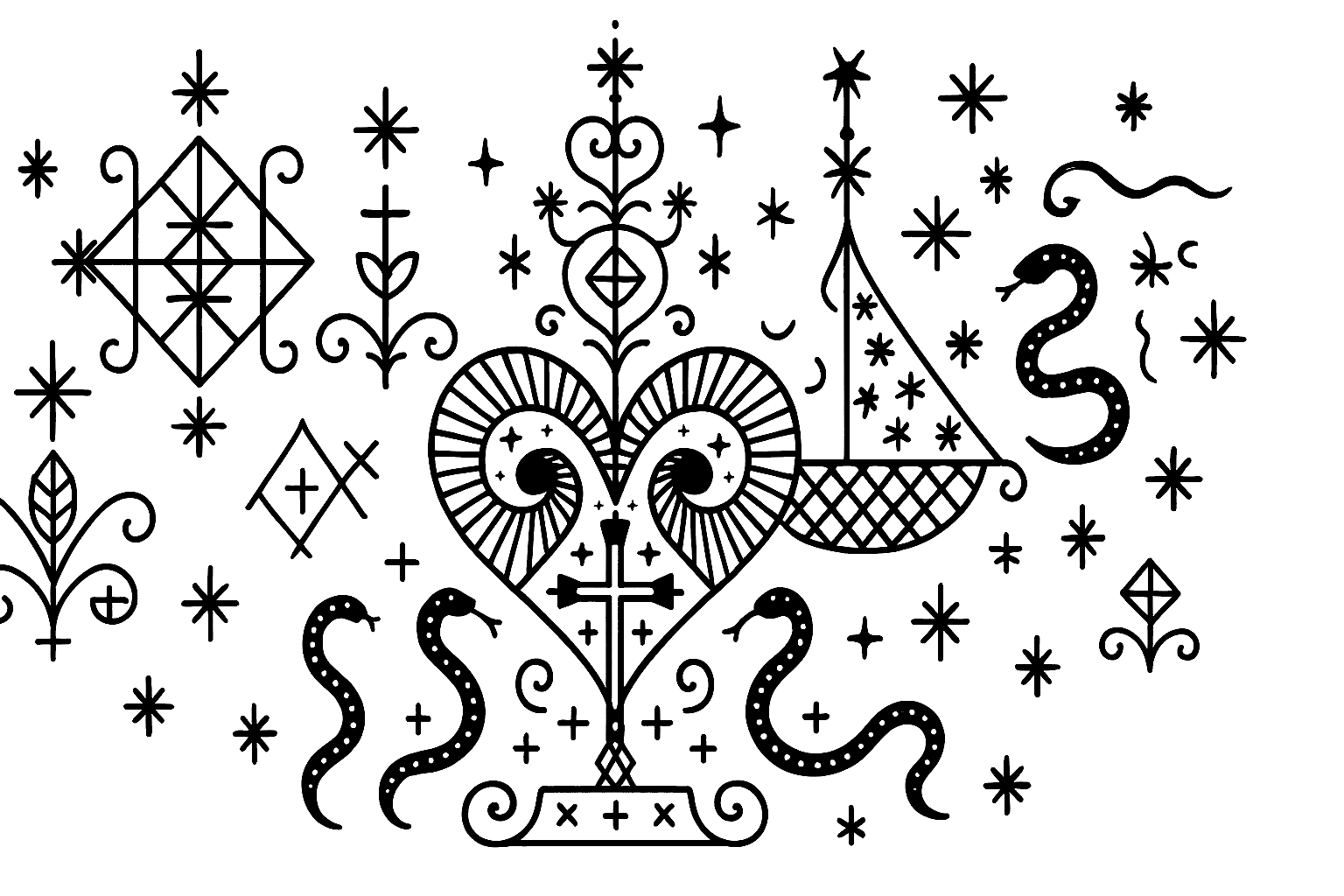
In Haitian Vodou, every lwa — every spirit served in the tradition — has a vèvè: a sacred emblem that belongs to that spirit alone. Before a ceremony, the houngan or mambo traces the vèvè on the ground of the peristyle, letting cornmeal (or ash, coffee grounds, or powdered brick) run in a fine line between the fingers. The drawing is made freehand, from memory, often around the poto mitan — the center post of the temple through which the spirits descend.

The vèvè is not decoration. It is an act of invocation: a call addressed to one lwa in particular, marking the exact point on the earth where that spirit is invited to arrive. Offerings are placed upon it, prayers are sung over it, and during the dance of the ceremony the drawing is gradually erased under the feet of the serving community — its purpose fulfilled.

The designs carry the memory of Africa — above all the sacred ground-drawings of the Fon and Kongo peoples — refined over more than two centuries in Haiti into one of the most distinctive sacred art forms in the world. To read a vèvè is to read the character of the spirit it names: the crossroads of Legba, the serpents of Damballah, the pierced heart of Dantor, the ship of Agwe.

Below, Houngan Kanson Fè presents the vèvè of some of the great lwa served at the Grand Peristyle, with what each drawing means and how to recognize it.

Galri a

Eleven Vèvè, Eleven Spirits

Presented in the order of service — beginning, as every ceremony must, with Papa Legba.

Vèvè of Papa Legba

Papa Legba

Keeper of the Crossroads

No ceremony begins without Legba. He is the old man at the gate, the master of the crossroads who holds the keys between the visible world and the world of the spirits. His vèvè is always traced first, because it is Legba who gives permission for every other lwa to pass. When a door in your life refuses to open — work, papers, opportunity — it is Legba who is asked to open the road.

In the drawingA central cross marking the crossroads; the walking cane of the old man; small circled crosses standing for the four directions.
Vèvè of Damballah Wedo

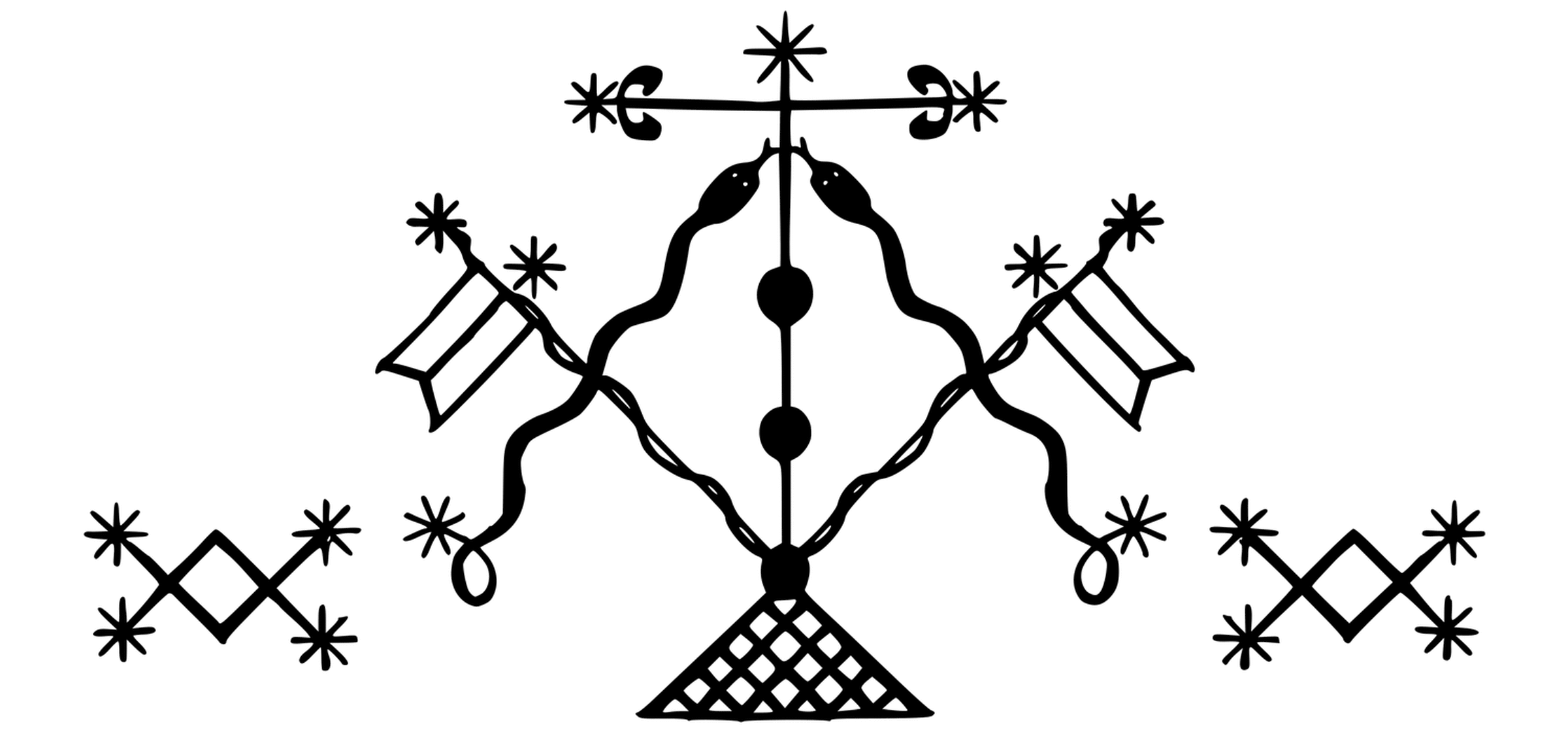
Damballah Wedo

The Great Serpent of Creation

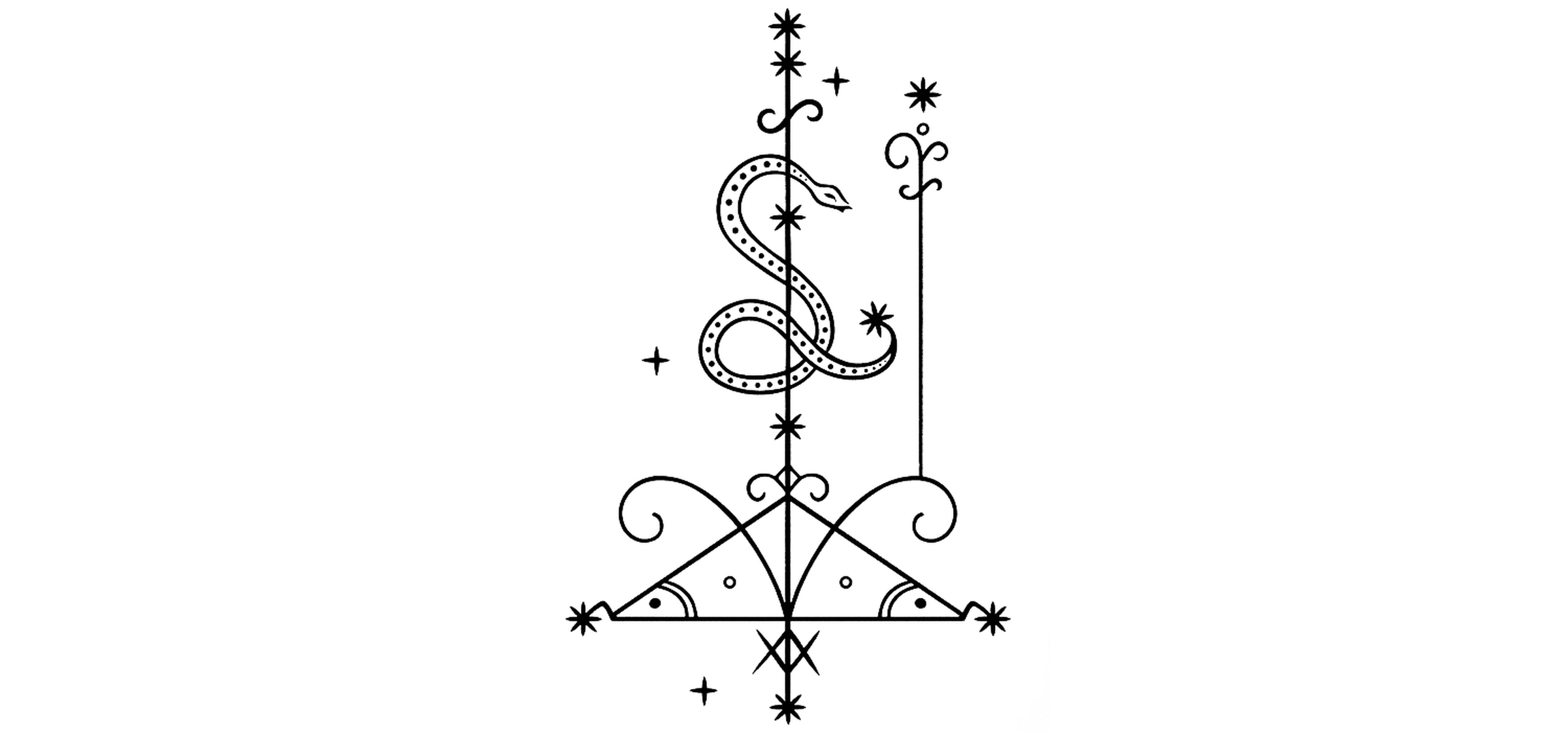
Damballah is among the oldest and most venerated of the lwa — the white serpent whose movement across the sky and waters set creation in motion. He speaks no words, only the pure hiss of the serpent, and he asks for purity in return: white cloth, an egg on a bed of flour, cool water. His presence brings peace, fertility, and blessing to a house. With his wife Ayida Wedo, the rainbow, he holds the world between them.

In the drawingTwo serpents rising and facing one another; ritual flags (drapo) on each side; the egg, his favored offering, at the center pole.
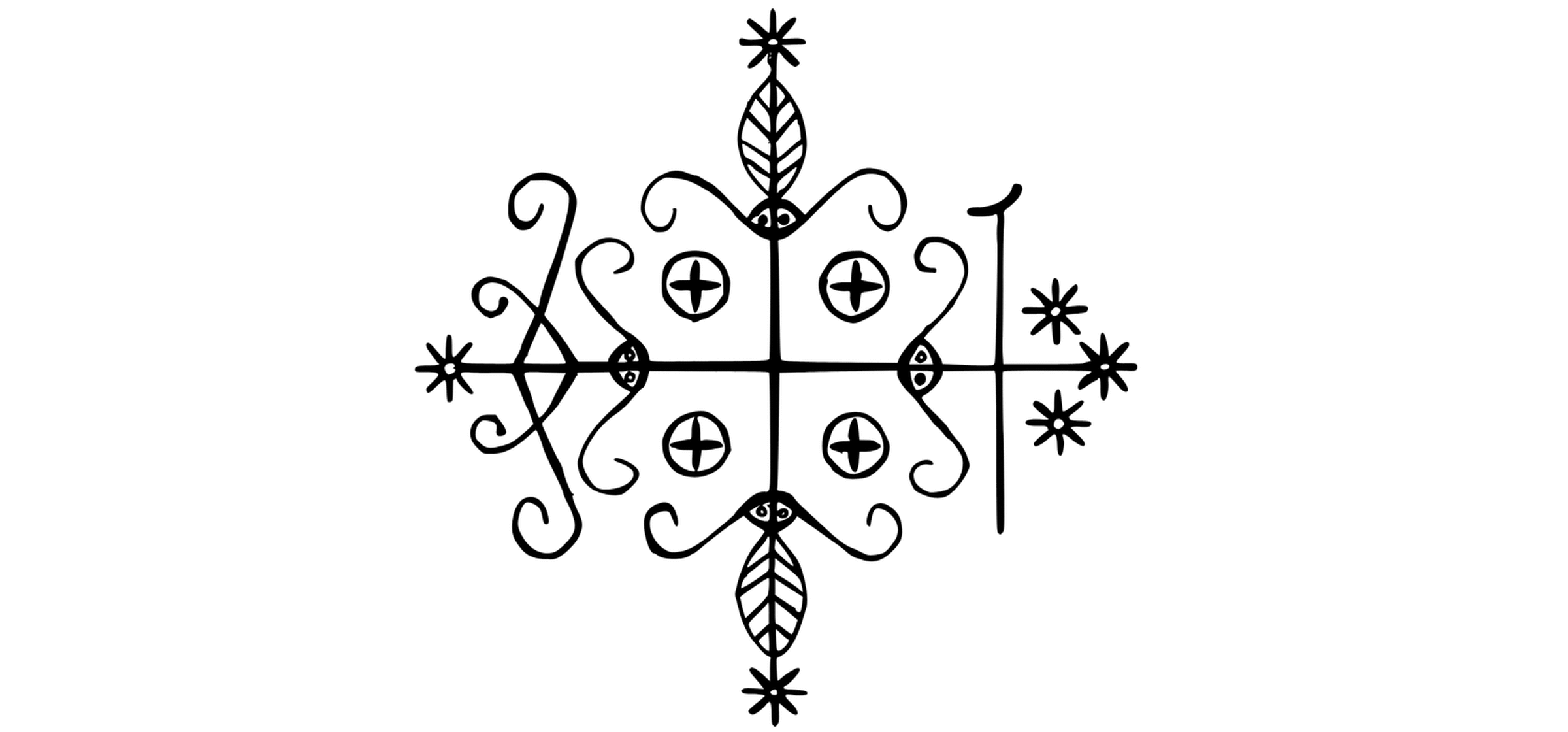
Vèvè of Ayizan Velekete

Ayizan Velekete

The First Mambo, Guardian of the Peristyle

Ayizan is the first priestess, the mother of initiation itself. She is the guardian of the peristyle, the marketplace, and all sacred beginnings. Her emblem is the royal palm frond, shredded into a fringe, which veils the face of the new initiate during kanzo. Where Ayizan is honored, the temple is clean, commerce is honest, and the tradition is passed on correctly.

In the drawingThe fringed palm frond at the center; crossed market roads; stars marking her presence in the sacred court.
Vèvè of Papa Loko

Papa Loko

First Houngan, Master of the Asson

Papa Loko is the husband of Ayizan and the first priest of the tradition — the one who confers the asson, the sacred rattle of priesthood. He is the spirit of the trees, especially the great mapou, and the guardian of healing leaves. Houngans and mambos answer to Loko for the correctness of their work: he is the judge of the clergy, and no one who abuses the asson escapes his eye.

In the drawingThe serpent coiled around the central pole recalling the poto mitan and the tree; the butterfly wings sometimes drawn at his sides; leaves of healing.
Vèvè of Agwe Tawoyo

Agwe Tawoyo

Admiral of the Seas

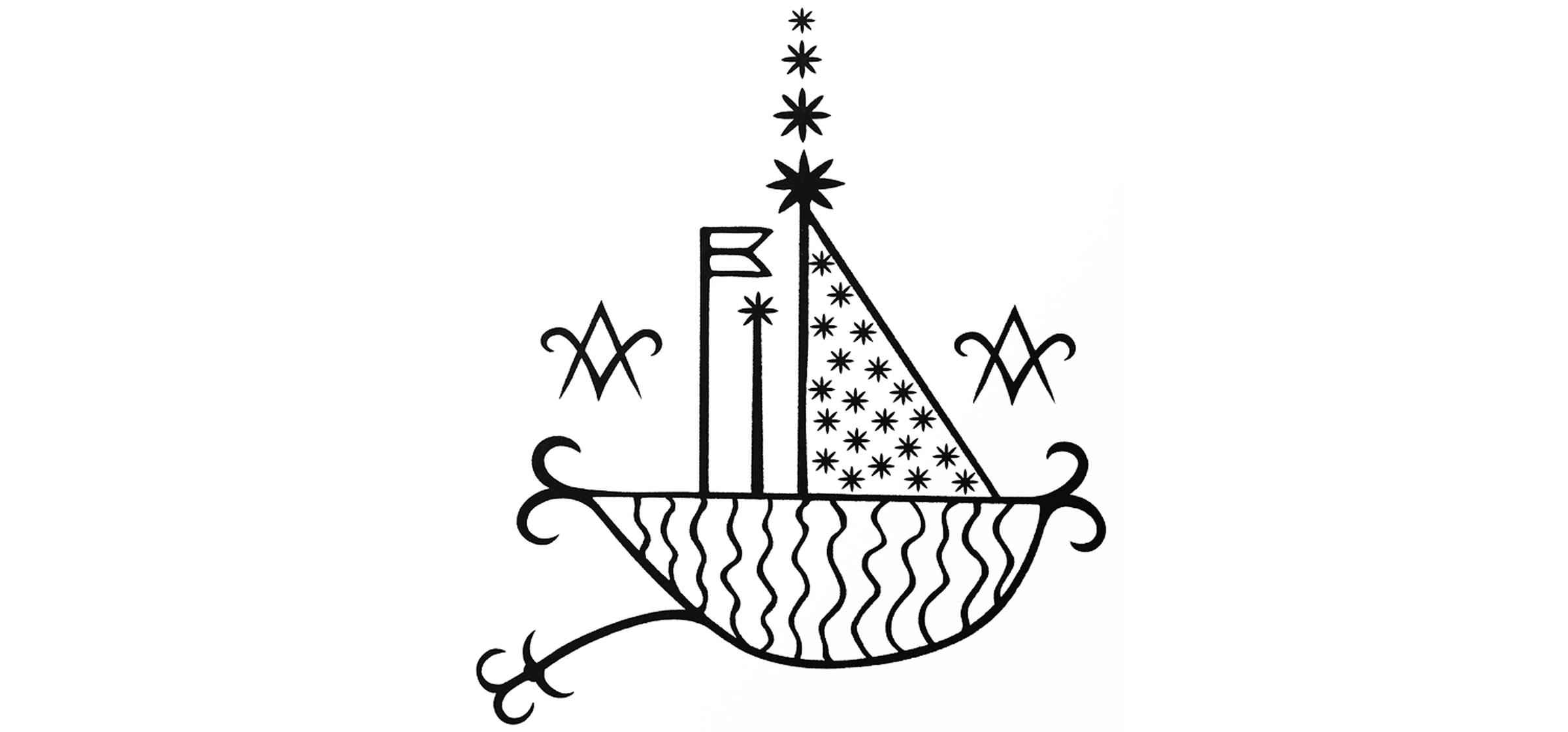
Agwe is the sovereign of the ocean — captain of the ship Imamou, protector of sailors, fishermen, and all who cross the water. For a people whose history crossed the Atlantic in chains and whose families are today spread across the sea, Agwe holds a special place: he is the lwa of the crossing itself. His service is held near the water, and offerings are set afloat on rafts for him to receive.

In the drawingA ship in full sail; waves beneath the hull; stars to steer by rising from the mast; his flag flying.
Vèvè of Erzulie Freda

Erzulie Freda

Lwa of Love, Beauty & Luxury

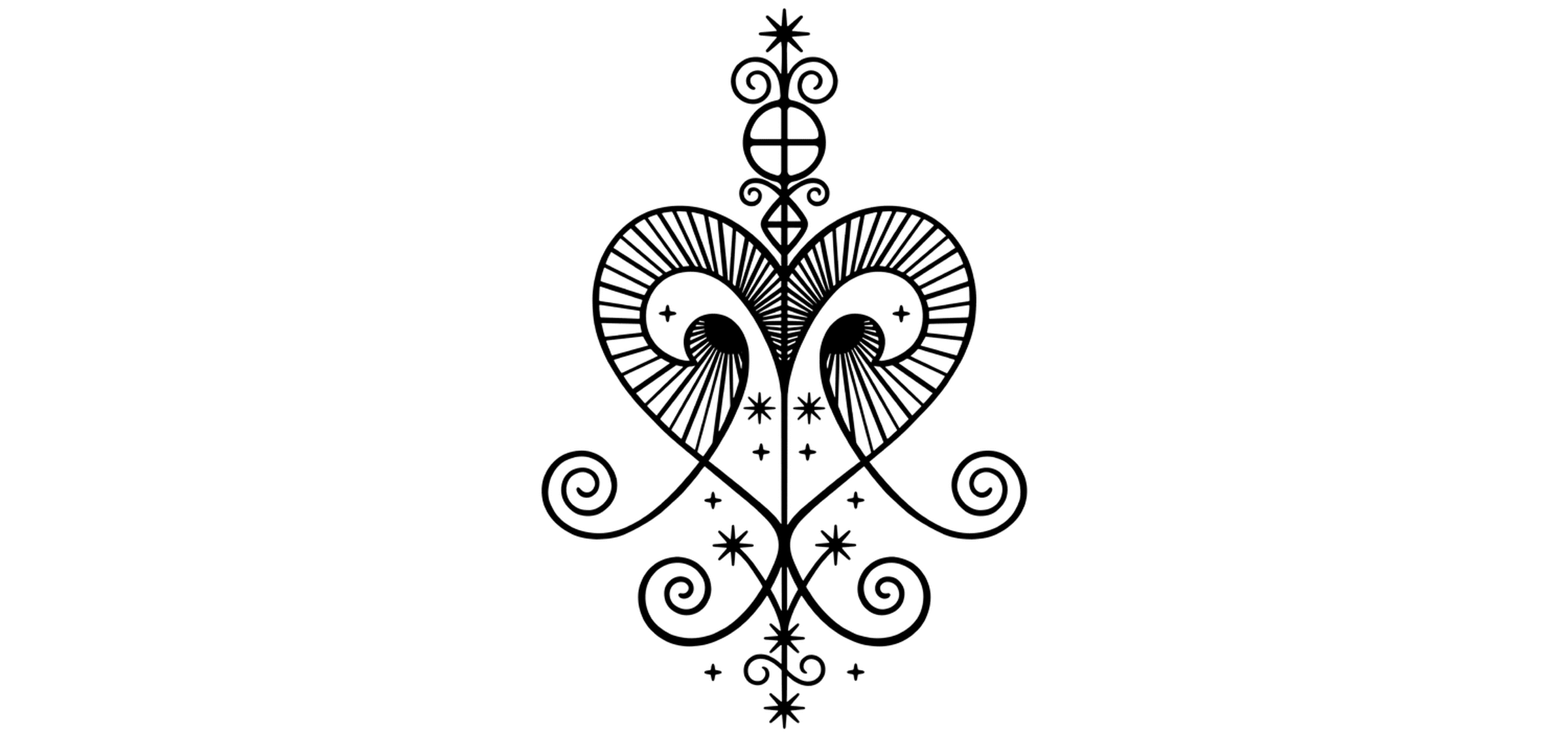
Freda is the great lady of the Rada rite — love, refinement, perfume, jewelry, everything beautiful and sweet in life. She is invoked in matters of the heart: to attract love, to repair what is broken, to soften what has hardened. She is generous but demanding, and she weeps for the imperfection of the world. Her colors are pink, white, and gold; her offerings are sweet.

In the drawingThe graceful heart at the center; lace-like flourishes and mirror-work recalling her luxury; stars of her sweetness.
Vèvè of Erzulie Dantor

Erzulie Dantor

The Fierce Mother

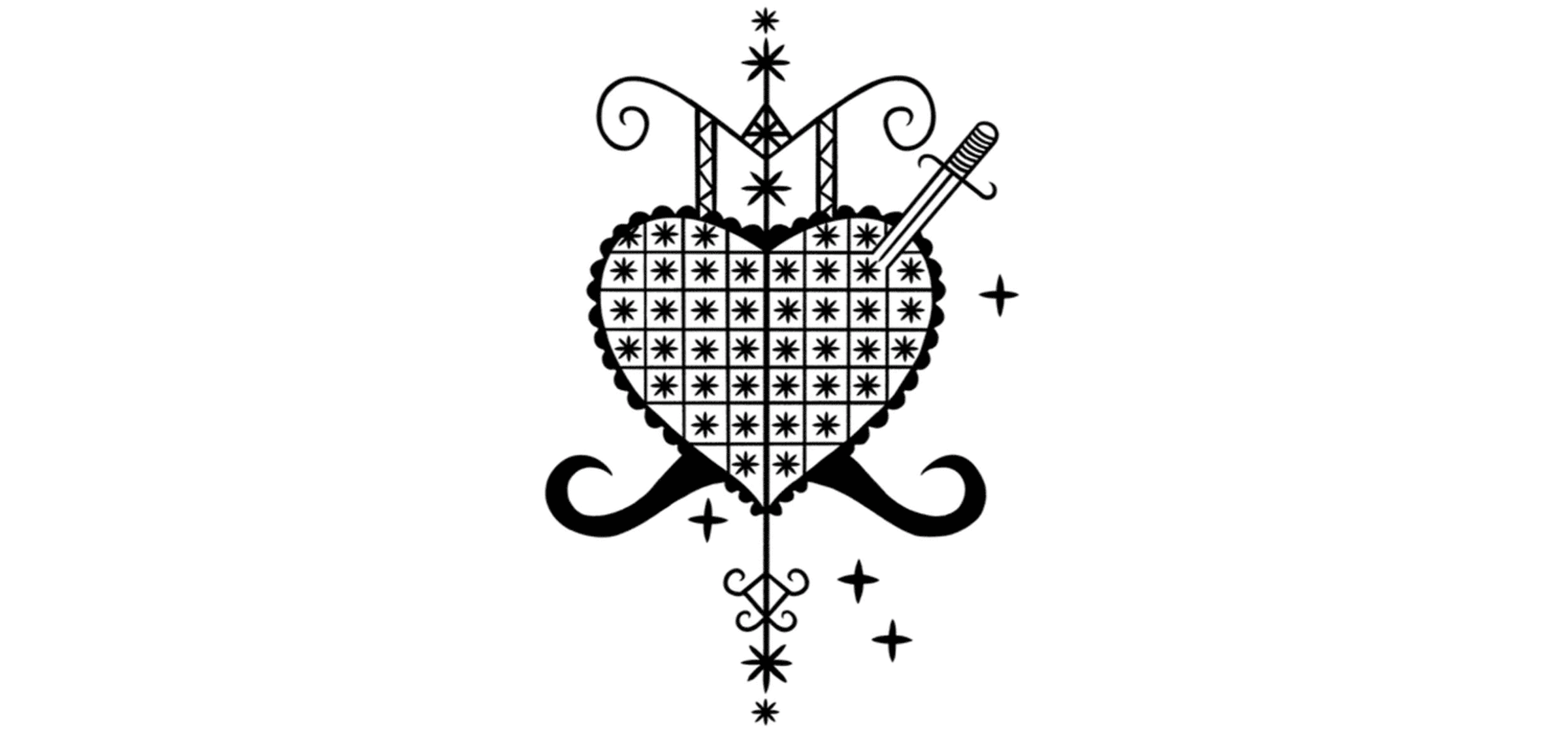
Dantor is the other face of love: the black Madonna, the single mother who works hard and defends her children with a knife. Where Freda is perfume and lace, Dantor is strength and loyalty. She is a fierce protector of women, of children, and of those the world has wronged — and tradition remembers her at Bwa Kayiman, at the very birth of Haiti's freedom.

In the drawingA heart pierced by a dagger — the wound and the weapon of the mother; the checkered pattern within recalling her scarred cheek and her strength.
Vèvè of Ogou

Ogou

Lwa of Iron, Fire & Victory

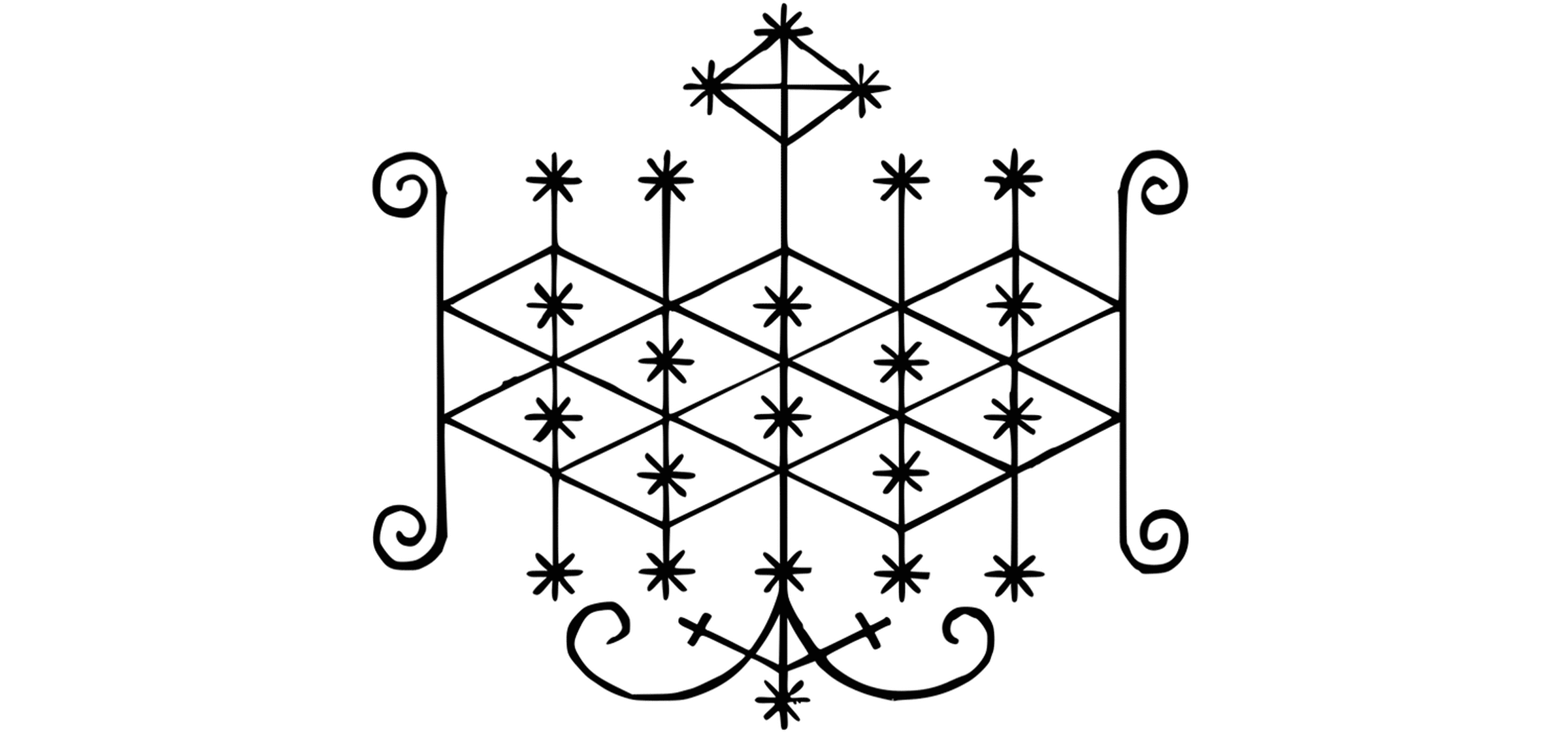
Ogou is the warrior and the blacksmith — the power of iron, of fire, of the machete and the soldier's discipline. He clears obstacles, wins battles in court and in life, and gives courage to the discouraged. He is also the patron of technology and of all who work with metal and machines. His color is red; his tree is the calabash; rum is poured and lit in his honor.

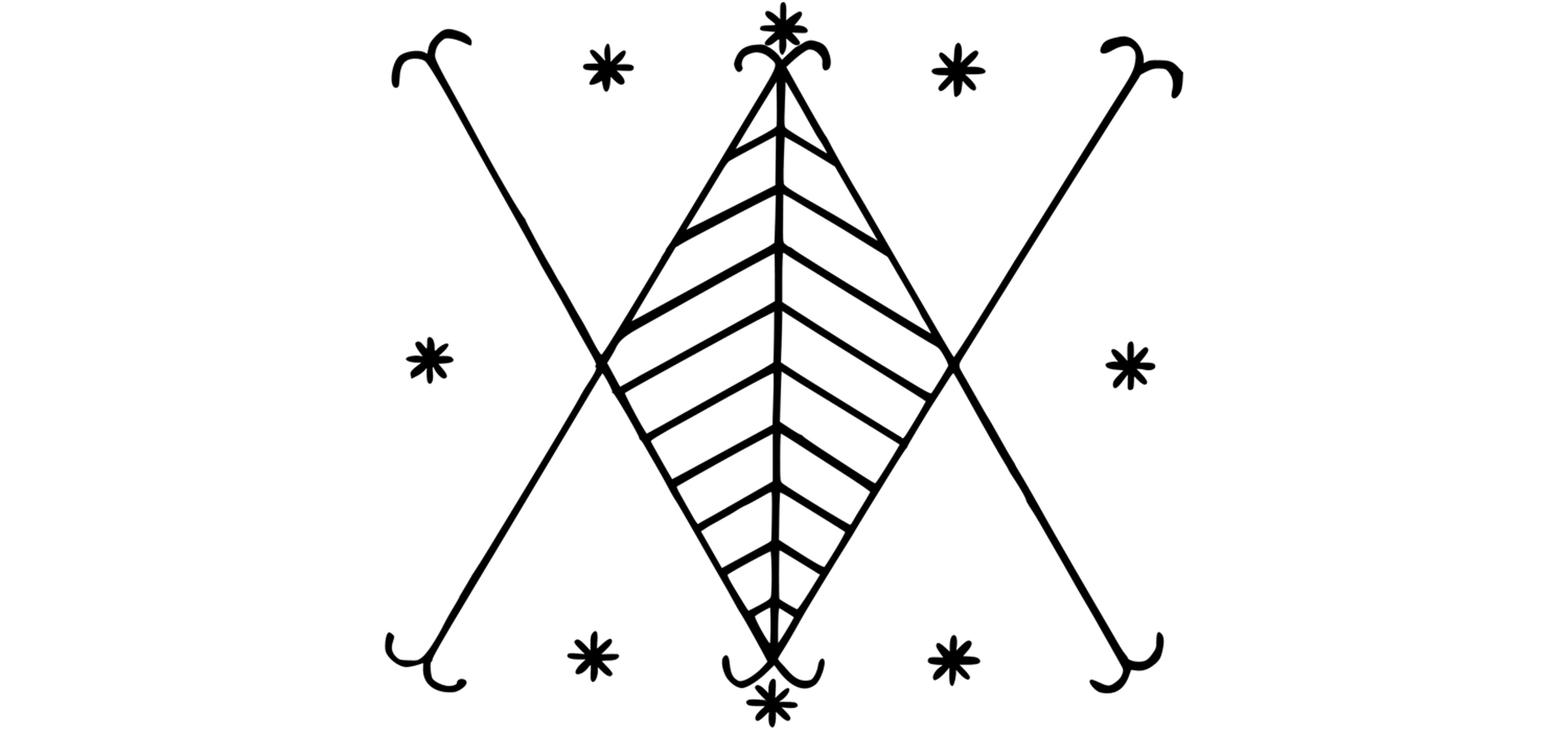
In the drawingThe interlaced diamond lattice recalling the forge and the flag; stars struck like sparks from the anvil; the framing bars of iron.
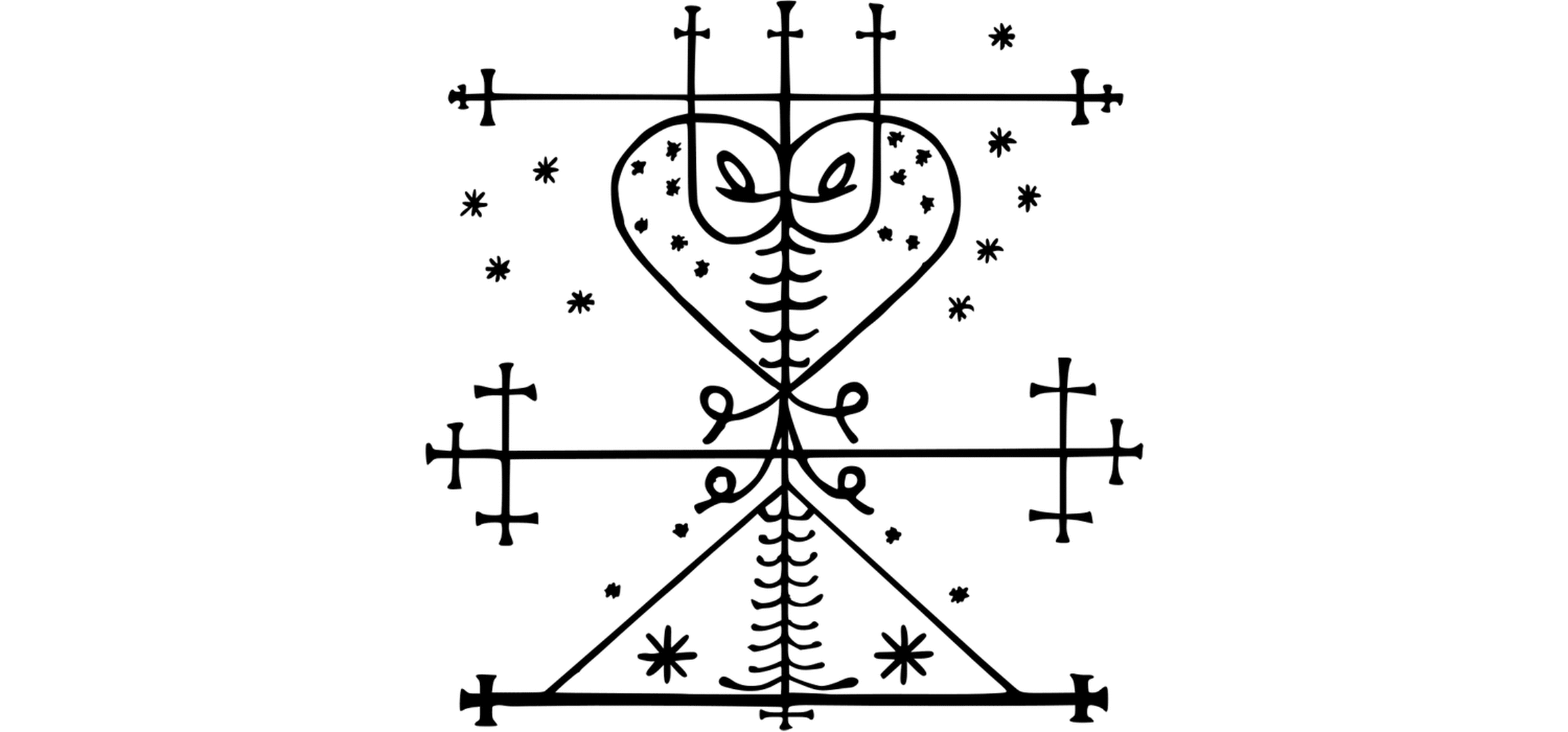
Vèvè of Kouzen Zaka (Azaka Mede)

Kouzen Zaka (Azaka Mede)

Minister of Agriculture

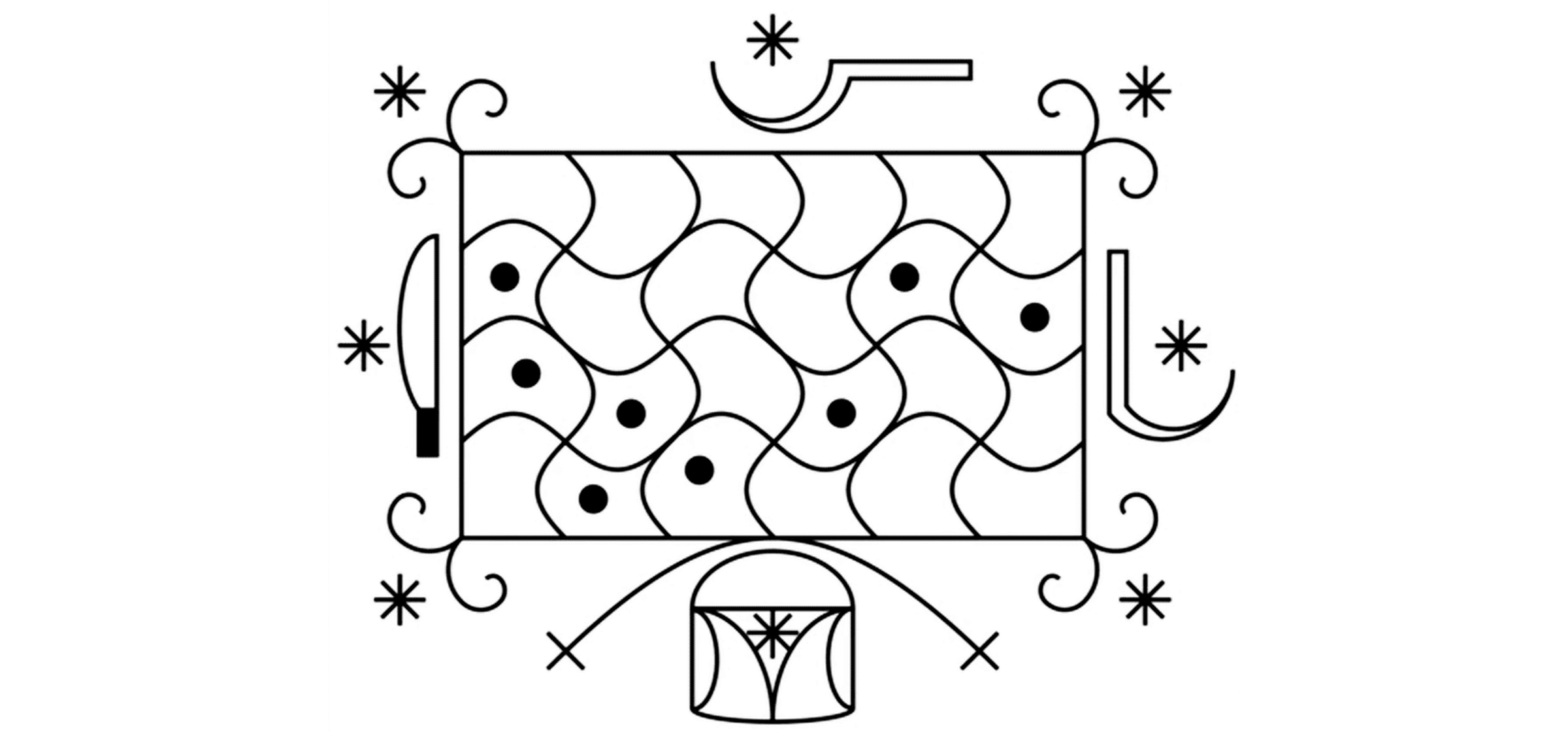
Kouzen — 'Cousin' — is the hard-working peasant farmer, the lwa of the land, the harvest, and honest labor. He arrives in denim and a straw hat, with his makout (straw bag) over his shoulder and his machete in hand. He is family to everyone, shrewd in a bargain, and generous from his garden. Those who work the land, or who simply work hard for their bread, are under his eye.

In the drawingHis woven makout bag filling the field of the drawing; the machete at its side; the pipe he loves to smoke beneath.
Vèvè of Baron Samedi

Baron Samedi

Lord of the Cemetery

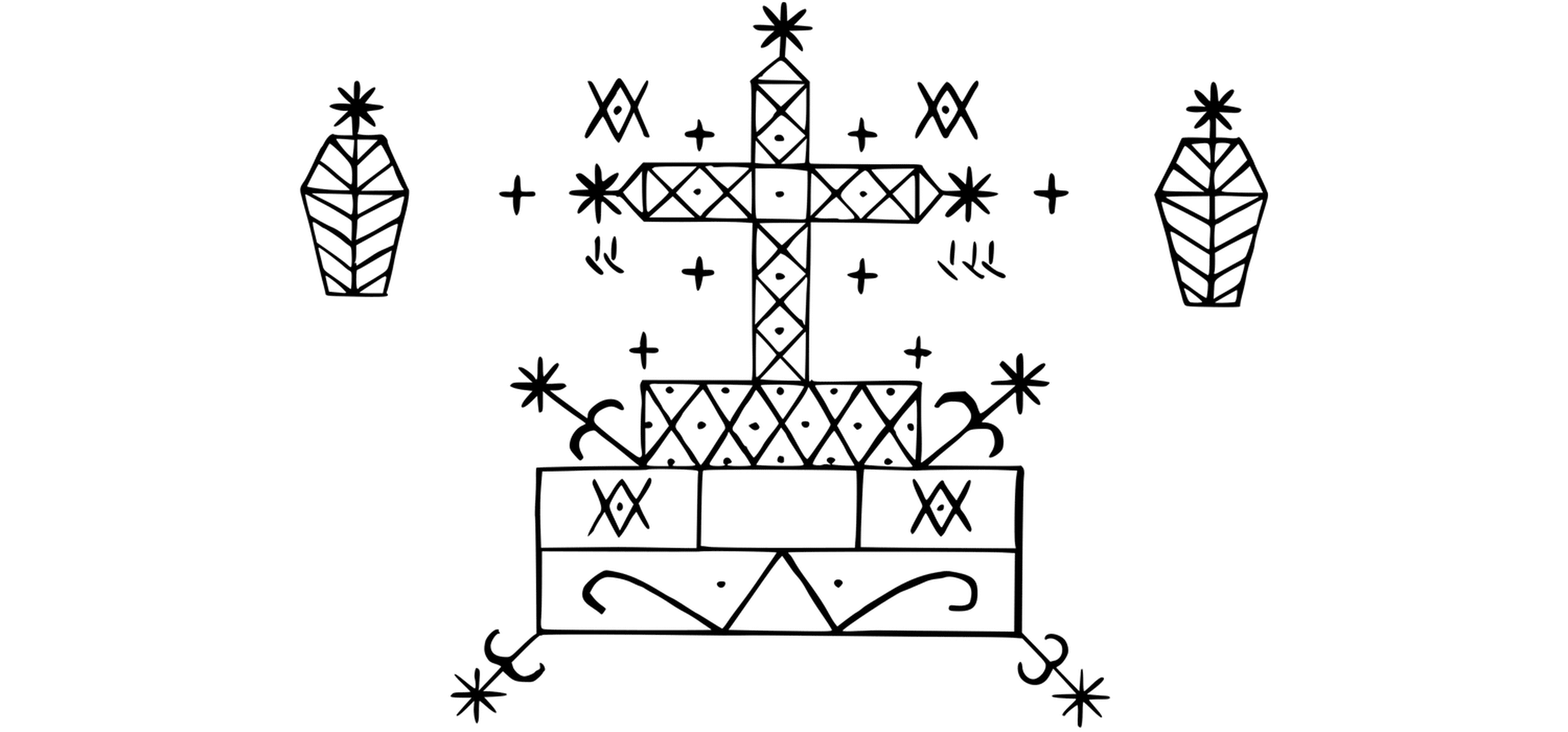
The Baron stands at the head of the Gede nation — master of the cemetery, keeper of the ancestors, guardian of the final gate. Nothing human shocks him and nothing can be hidden from him, which is why he is also a great healer: no one dies before their time if the Baron refuses to dig the grave. His humor is sharp, his justice is final, and his cross stands over every cemetery in Haiti.

In the drawingThe cross of the Baron raised on a tomb; the coffins at each side; the mounded grave beneath the monument.
Vèvè of Grann Brijit

Grann Brijit

Mother of the Cemetery

Grann Brijit is the wife of Baron Samedi and the first woman buried in any cemetery is consecrated to her. She is the fierce grandmother of the dead — a judge who cannot be bribed, invoked when justice has failed in the visible world. With the Baron she receives the ancestors, protects the graves, and watches over matters of ultimate truth.

In the drawingThe heart above the tomb — for she is a mother still; the triangle of the grave mound; the crosses of the cemetery gates around her.

A Word of Respect

The vèvè belong to a living religion. They may be admired, studied, and drawn as art — but in Vodou they are used with purpose, with training, and with the permission of the spirits they name. If a vèvè has appeared in your dreams, if you feel called by a particular lwa, or if you simply wish to understand the tradition more deeply, the correct first step is a consultation.

Ask Kanson Fè About a Vèvè Study Further in the Library